
The Project Manager’s Secret Weapon: Stop Playing Risk Roulette
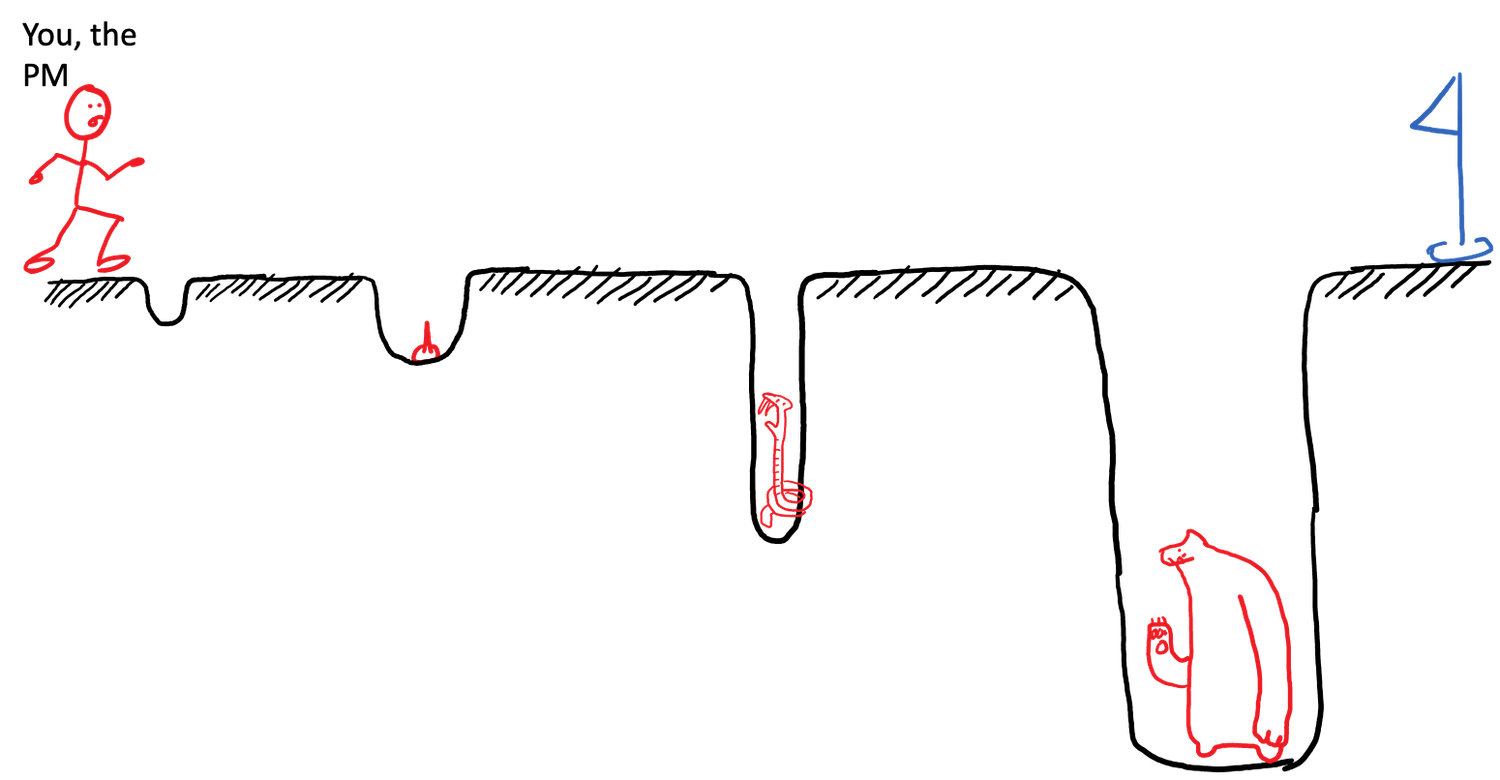
We often treat risk management like a broken fire alarm. We wait for the flames, then panic.
But successful project managers know that reacting to disaster is not a strategy. It's an expense.
They don't wait until the "Monitoring and Controlling" phase to scramble. They build a system.
A system that turns uncertainty into a quantifiable plan.
The 6-Step Project Risk System (The Blueprint)
Risk Management isn't a single action; it's a dedicated knowledge area built right into the Planning Process Group.
You need to work through this system sequentially:
Plan Risk Management: Determine how you'll handle risk throughout the project.
Identify Risks: Find those threats and opportunities.
Perform Qualitative Risk Analysis: Prioritize the biggest threats based on probability and impact.
Perform Quantitative Risk Analysis: Assign numbers (Expected Monetary Value) to risks to understand their potential cost impact.
Plan Risk Responses: Decide what action you will take now to prepare for later.
Monitor and Control Risk Responses: Ongoing vigilance; look for newly arising risks and evaluate if your responses are actually working.
Your Response Matrix: Threats and Opportunities
The true skill is not listing risks. It's knowing exactly how to respond when they arise.
You have different levers for positive risks (opportunities) and negative risks (threats).
For Negative Threats (Risks that Cost You):
Avoid: Removing the work package or activity entirely from the project scope to eliminate the risk.
Transfer: Shifting the consequence and ownership of the risk to a third party (e.g., outsourcing difficult work to a more experienced company, or buying insurance).
Mitigate: Reducing the probability or impact of the risk. Example: Prototyping a risky piece of equipment or providing extra training to a team member.
Accept: Choosing not to change the plan for the risk, often done if the impact is small or if no appropriate response can be found. Accepting requires contingency reserves.
For Positive Opportunities (Risks that Benefit You):
Exploit: Assigning a highly experienced resource to a work package to ensure the opportunity is captured.
Enhance: Increasing the probability of the positive risk (e.g., beginning negotiation for equipment earlier to secure a lower price).
Share: Partnering with a third party to maximize a shared opportunity (e.g., outsourcing a work package to gain an opportunity).
Want to learn more? Enroll at pmp.made2sticklearning.com
Join our vast online community to learn together and accelerate your success