
The Hidden Cost of Assumptions in Project Management
Last year, we ran a project that slipped by two weeks.
At first glance, two weeks might not sound like much. In the grand scheme of things, projects can run longer, and delays happen. But here’s the thing: this wasn’t caused by lack of resources, unforeseen risks, or external dependencies.
It happened because of one simple assumption I made.
The Root of the Problem
I assumed everyone understood the requirements.
In kickoff discussions, we talked about milestones, deliverables, and timelines. Everyone nodded. Everyone seemed aligned. But as the work progressed, cracks began to show.
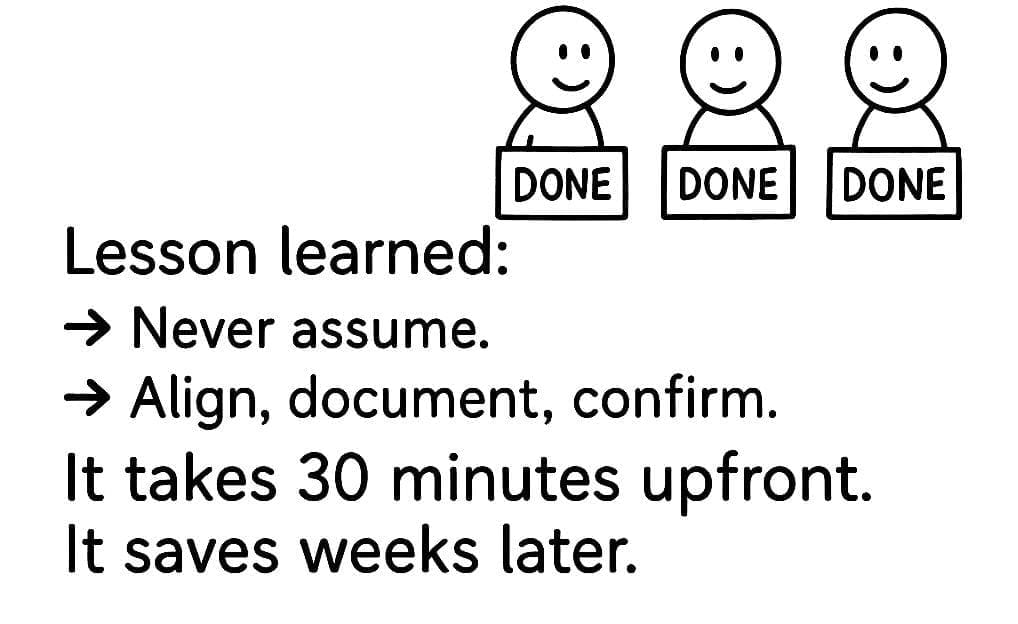
When we reached what I thought was the “finish line” for a key deliverable, one team said, “We’re done.” Another said, “Not yet, we still need to validate.” The third said, “We’ve delivered our part—it’s the other teams who aren’t finished.”
That’s when it hit me: we weren’t working with one definition of “done.” We had three.
The Impact
Because of this misalignment, tasks were re-opened, dependencies were delayed, and handoffs became messy. What should have been a clean milestone turned into weeks of rework.
All because I didn’t stop to confirm that everyone shared the same meaning of a simple word: done.
The Lesson Learned
This experience gave me one of the most practical lessons of my career:
👉 Never assume.
👉 Align, document, confirm.
Alignment doesn’t happen by accident. It requires deliberate effort. Documenting ensures clarity and prevents “he said, she said.” Confirming closes the loop and makes sure every stakeholder is truly on the same page.
It doesn’t take hours. In fact, spending 30 minutes upfront to align saves weeks later.
Practical Takeaways for Project Managers
Define “done” together. Don’t rely on implied understanding—write it down. Whether it’s a deliverable, milestone, or phase, make sure every team agrees on what “completion” means.
Document in plain language. Avoid jargon or team-specific shortcuts. Keep it simple, so no one can misinterpret.
Confirm alignment in writing. Recap decisions in a follow-up email or project log. It creates accountability and prevents confusion later.
Revisit often. Projects evolve. Revisit definitions of “done” as scope changes or new stakeholders join.
Final Thought
Project management isn’t just about Gantt charts, deadlines, and budgets. It’s about people, communication, and shared understanding.
Two weeks of delay taught me a valuable truth: misalignment costs more than missed deadlines.
Deadlines matter. But clarity—and trust—matter even more.
Join our vast online community to learn together and accelerate your success